From Materials to Process: How High-Quality Lithium-Iter Batteries Achieve 1,500-Cycle Lifespan

In the lithium-ion battery industry, cycle life is a key indicator of product quality. While ordinary commercial lithium-ion batteries typically last 800-1,000 cycles, high-quality variants can achieve 1,500 cycles or more. What technological foundations support this performance? This article provides an in-depth analysis of the full technology chain advantages, from core materials to manufacturing processes.
I. Electrode Materials: The Foundation of Long Life
-
Single-Crystal High-Nickel Cathode Material
-
Technical Characteristic: Compared to traditional polycrystalline materials, the single-crystal structure effectively suppresses particle cracking.
-
Impact on Lifespan: Crystal structure stability improves by over 50% during cycling.
-
Data Support: Maintains over 85% capacity retention even at a high voltage of 4.3V.
-
-
Silicon-Carbon Composite Anode Material
-
Innovative Design: Utilizes a composite system of nano-silicon and graphite.
-
Technical Breakthrough: Effectively mitigates the 300% volume expansion of silicon material during charge/discharge cycles.
-
Lifespan Performance: Initial Coulombic efficiency increased to 92%, with cycle-induced expansion rate controlled within 5%.
-
II. Electrolyte Formulation: The "Circulatory System" for Extending Life
-
Specialized Additive Package
-
Film-Forming Additives: Form a dense and stable SEI film on the anode surface.
-
Flame-Retardant Additives: Enhance intrinsic battery safety.
-
High-Temperature Additives: Improve cycle life by 40% in 60°C environments.
-
-
Optimized Lithium Salt System
-
Dual-Lithium Salt Formulation: Synergistic effect of LiPF6 and LiFSI.
-
Conductivity Optimization: Maintains stable ionic conductivity across a temperature range of -20°C to 60°C.
-
Corrosion Inhibition: Reduces corrosion current on current collectors to below 0.1 μA/cm².
-
III. Manufacturing Process: Quality Assurance through Precision
-
Fully Automated Stacking Process
-
A comparison table showing the transition from Winding Structure (Stress Concentration, ~800 cycles) to Stacking Structure (Uniform Stress Distribution, ~1500 cycles).
-
-
Extreme Moisture Control
-
Drying Room: Dew point temperature controlled below -45°C.
-
Raw Material Treatment: Electrode material moisture content ≤ 50 ppm.
-
Encapsulation Environment: Cell moisture content before/after electrolyte filling ≤ 10 ppm.
-
-
100% Full Inspection & Sorting
-
Capacity Sorting: Capacity deviation controlled within ±1%.
-
Internal Resistance (IR) Sorting: IR deviation ≤ 3%.
-
Self-Discharge Screening: Voltage drop within 24 hours ≤ 5 mV.
-
IV. Accelerated Aging Test Validation
Reliability of the 1,500-cycle lifespan is validated through stringent testing:
-
Test Conditions:
-
Charge/Discharge Rate: 1C/1C
-
Temperature: 25°C
-
End Condition: Capacity retention rate ≥ 80%
-
-
Test Results:
-
Cycle 500: 95.3% capacity retention
-
Cycle 1000: 88.7% capacity retention
-
Cycle 1500: 81.2% capacity retention
-
V. Real-World Application Cases
-
Case 1: Residential Energy Storage System
-
Application Scenario: Home PV energy storage system in Germany.
-
Operational Data: 1.5 cycles per day; 89% capacity retention after 3 years.
-
User Feedback: "Stable system operation, degradation is fully within expectations."
-
-
Case 2: Electric Bus
-
Application Scenario: Daily urban bus operation of 250 km.
-
Durability Performance: 82% capacity retention after 3 years / 400,000 km.
-
Economic Value: Extends service life by 2 years compared to standard batteries.
-
VI. Technology Outlook
With advancements in materials and manufacturing, next-generation batteries are targeting 2,000 cycles:
-
Solid-State Electrolytes: Fundamentally address interface side reactions.
-
Intelligent BMS Algorithms: Enable lifespan prediction and health management.
-
Regenerative Repair Technologies: Online repair of electrode material degradation.
Conclusion
Achieving a 1,500-cycle lifespan represents the perfect integration of materials science, electrochemical principles, and precision manufacturing technology. When selecting a lithium-ion battery supplier, it is crucial to look beyond price and deeply understand their technical roadmap and manufacturing capabilities.
About Us: Soltrust specializes in the R&D and manufacturing of high-cycle-life lithium-ion batteries, possessing the complete technology chain from material formulation to process manufacturing. Our products exceed industry cycle life standards by over 30%.
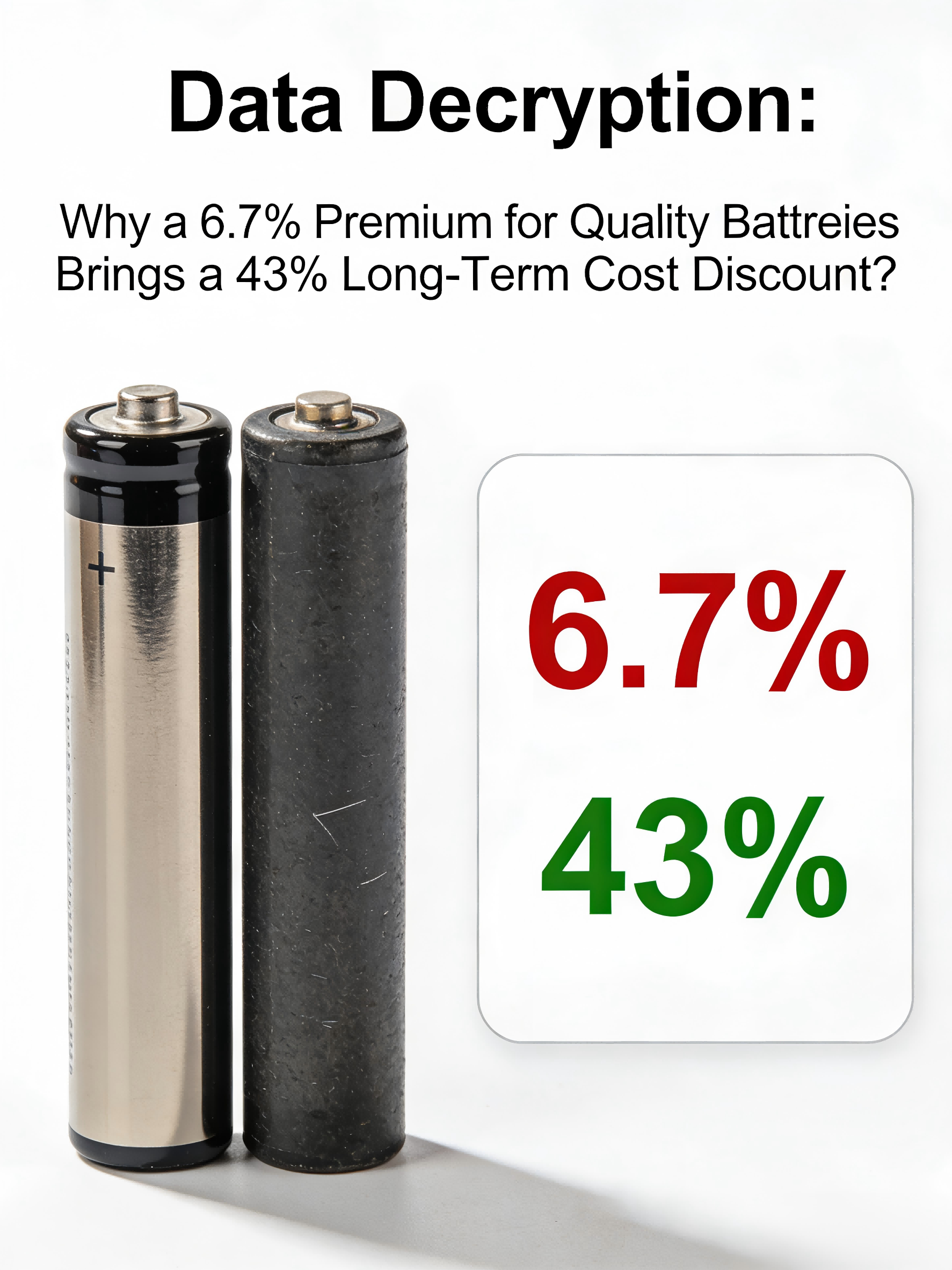
Data-Driven Insights: Why the "Premium" for High-Quality Lithium Batteries Is Actually a "Discount"
From 3 Years to 6 Years: How High-Quality Batteries Are Redefining Equipment Replacement Cycles
Related Article