From 3 Years to 6 Years: How High-Quality Batteries Are Redefining Equipment Replacement Cycles
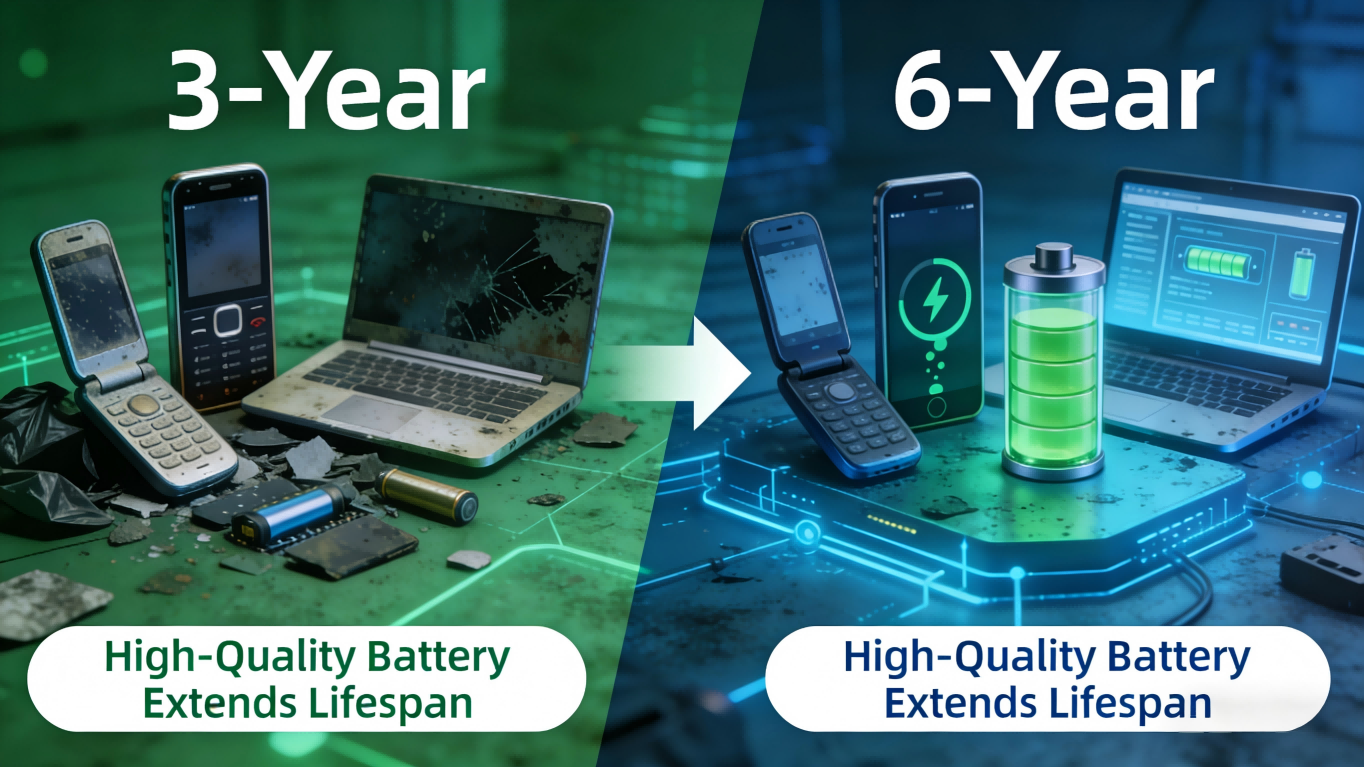
In today's fast-paced world of product iteration, manufacturers and end-users face a common pain point: battery life often becomes the "weakest link" determining a device's usable lifespan. While standard batteries typically require replacement after about 3 years, high-quality lithium batteries can effortlessly extend equipment service life to 6 years or more. How is this doubling of lifespan achieved, and how is it reshaping product lifecycle management?
1. Battery Lifespan: The Decisive Factor in Equipment Replacement Cycles
In most electronic devices, energy storage systems, and power tools, the battery is either a non-replaceable core component or prohibitively expensive to replace. The functional life of the equipment is often determined not by the casing or circuit boards, but by the battery's cycle life and calendar life.
Typical Equipment Lifespan Comparison:
-
Equipment with standard batteries: Requires battery or full unit replacement every 2-3 years.
-
Equipment with high-quality batteries: Maintains over 80% capacity for 5-6 years.
-
Lifespan extension: Over 100%.
2. The Technical Foundation for Doubling Lifespan
A. Breakthroughs in Materials
-
Enhanced Electrode Stability: Single-crystal cathode materials reduce particle cracking during cycles; silicon-carbon composite anodes mitigate volume expansion; new binder systems enhance electrode structural integrity.
-
Optimized Electrolyte Formulation: Proprietary additive packages form stable interface films; high-temperature tolerance raised above 60°C; low self-discharge formulations (<3% per month).
B. Precision Manufacturing & Control
-
Consistency Assurance: Fully automated stacking process (±0.1mm alignment); electrode coating thickness deviation controlled within ±2%; 100% cell grading and grouping (±1% capacity tolerance).
-
Environmental Standards: Dry room dew point ≤ -45°C; moisture content during electrolyte filling ≤10ppm; formation aging temperature control precision ±0.5°C.
3. Value Chain Transformation Through Extended Lifespan
A. Value for Equipment Manufacturers
-
Enhanced Product Competitiveness: "Long life" becomes a key selling point; reduces warranty failure rates (over 80% reduction in after-sales costs); builds a premium brand image.
-
Supply Chain Optimization: Reduces inventory pressure; simplifies product line management; lowers quality control complexity.
B. Value for End Users
-
Lower Total Cost of Ownership (TCO): For a 10kWh home energy storage system:
-
Standard battery: Requires replacement twice in 6 years, total cost ~$4500.
-
High-quality battery: No replacement needed in 6 years, total cost ~$2400.
-
Savings over 6 years: $2100 (47% reduction).
-
-
Improved User Experience: Avoids frequent replacement hassles; maintains stable performance; reduces equipment downtime.
4. Practical Application Case Studies
Case 1: Telecom Base Station Backup Power
-
Challenge: High maintenance costs and difficult battery replacement in remote areas.
-
Solution: Implemented high-quality lithium batteries with 1500 cycles.
-
Results: Replacement cycle extended from 3 to 6 years; maintenance costs reduced by 60%; significant improvement in network reliability.
Case 2: Electric Garden Tools
-
Challenge: Rapid battery degradation under daily professional use.
-
Solution: Utilized high-rate, long-life power batteries.
-
Results: Tool lifespan extended from 2 to 4 years; cost per operation reduced by 35%; user satisfaction increased to 95%.
5. Key Technical Evaluation Points for Selecting High-Quality Batteries
-
Core Parameters: Cycle life ≥1500 cycles (to 80% capacity); calendar life ≥8 years; annual capacity decay rate ≤3%.
-
Testing & Validation: Require third-party cycle test reports; request real-world case study data; validate high-temperature performance.
-
Technical Support Capability: Seek suppliers offering custom design services, failure analysis, and long-term performance monitoring.
6. Future Development Trends
Battery lifespan continues to improve:
-
2025 Goal: Achieve 2000 cycles.
-
2028 Outlook: Calendar life exceeding 10 years.
-
Technology Path: Solid-state batteries, silicon anodes, lithium metal anodes.
Conclusion
The shift from a 3-year to a 6-year replacement cycle represents more than just extended time; it signifies a qualitative leap in product value and user experience. Choosing high-quality batteries is an investment not only in product longevity but also in long-term brand reputation and customer loyalty.
When planning your next product, make battery lifespan a core consideration. We are ready to provide professional technical consultation and customized battery solutions to help you build products that truly stand the test of time.
About Soltrust: We specialize in providing long-life lithium battery solutions. Through material innovation and precision manufacturing, we help customers double equipment lifespan. Our batteries are widely used in energy storage systems, power tools, industrial equipment, etc., with a cycle life exceeding industry standards by over 30%.
From Materials to Process: How High-Quality Lithium-Iter Batteries Achieve 1,500-Cycle Lifespan
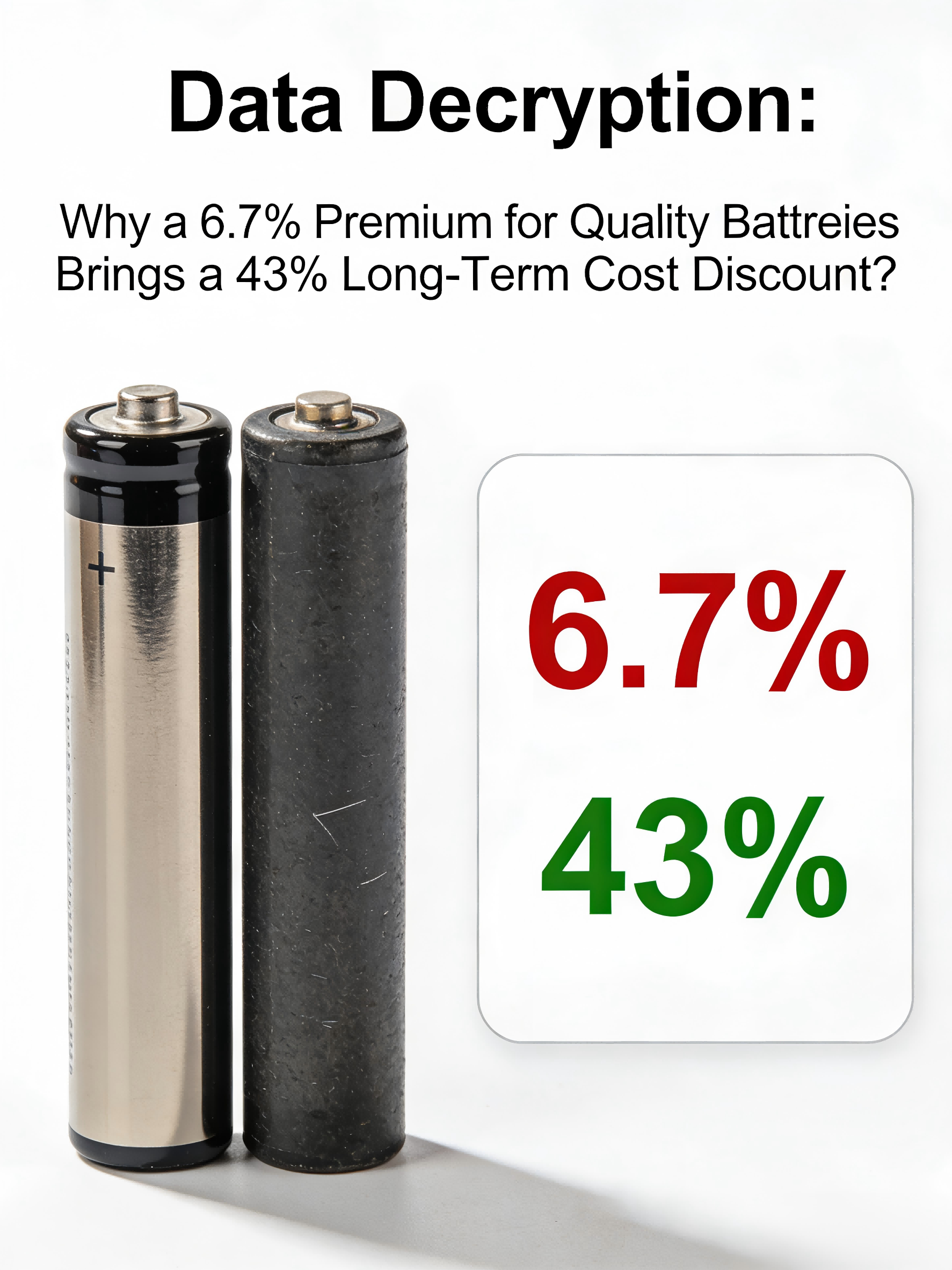
Data Revealed: How High-Quality Lithium Batteries Achieve 43% Cost Savings Through Longer Lifespan
Related Article