More Than Safety: How LFP's Total Cost of Ownership is Reshaping the C&I Energy Storage Landscape

For years, the selection of Commercial and Industrial (C&I) energy storage systems revolved around a simple equation: upfront investment versus expected return. Historically, this often led to seemingly "economical" choices, until decision-makers started accounting for a different metric—Total Cost of Ownership (TCO).
In this shift in perspective, Lithium Iron Phosphate (LFP) technology has evolved from a reliable battery chemistry into the undeniable mainstream choice for C&I energy storage. The driving force is no longer just its well-known safety features, but a profound revolution in financial robustness and long-term value.
Part 1: Beyond the Safety Benchmark: Re-evaluating LFP's Inherent Advantages
Safety is undoubtedly the cornerstone of C&I energy storage. The stable olivine structure of LFP batteries grants them a higher thermal runaway threshold and greater chemical stability, significantly reducing fire risks. This makes LFP the natural choice for facilities with zero tolerance for safety compromises, such as factories, campuses, and data centers.
However, this is only the beginning of the story. What truly makes LFP a market disruptor is its unparalleled economic engine, primarily driven by three core dimensions:
1. Cycle Life: The Core Determinant of ROI Payback Period
LFP cells typically achieve a cycle life of over 6,000 cycles (while retaining 80% capacity), with some advanced products even promising more than 10,000 cycles. In contrast, traditional Lithium Nickel Manganese Cobalt Oxide (NMC) batteries often show significant degradation after 3,000-4,000 cycles.
What this means for the client: For a C&I storage system undergoing one full cycle per day, an LFP solution can operate stably for over 16 years, whereas an NMC solution might require consideration for replacement or major repair in about 10 years. LFP extends the system's effective service life by more than 50%, drastically reducing annual depreciation costs.
2. Calendar Life: The Key to Combating Time-Based Degradation
Even when not in use, battery performance degrades over time—this is "calendar life." LFP technology excels here, with a much slower degradation rate compared to other chemistries.
What this means for the client: Many C&I storage projects don't involve daily full cycles. The long calendar life of LFP ensures that even in backup scenarios with infrequent use, the system retains significant usable capacity after 8-10 years, avoiding the risk of asset stranding where "the battery hasn't cycled much, but its capacity has naturally faded."
3. High-Temperature Tolerance and Lower Maintenance Costs
LFP batteries are less sensitive to high-temperature environments, with less correlation between capacity fade and heat. This can allow for less stringent cooling requirements, reducing energy consumption for thermal management systems. Furthermore, their stable chemistry simplifies long-term maintenance and reduces associated costs.

Part 2: TCO Analysis: Calculating the "Invisible" Costs
Let's illustrate with a simplified financial model for a hypothetical 500kW / 1000kWh C&I storage project:
|
Cost Item |
Traditional NMC Scenario (Assumed) |
LFP Scenario (Assumed) |
LFP Advantage Analysis |
|---|---|---|---|
|
Upfront Investment |
Baseline |
May be comparable or slightly higher (gap closing rapidly) |
Economies of scale make LFP cost highly competitive with NMC. |
|
Cost per Cycle |
Higher cost per kWh cycled |
Significantly lower cost per kWh cycled |
Higher cycle count means far lower depreciation cost per cycle compared to NMC. |
|
Maintenance & Replacement Cost |
Potential major maintenance or partial replacement around Year 10 |
Very low maintenance needs within 15 years; no mid-life replacement required |
Substantially reduces lifecycle CapEx and O&M costs. |
|
Residual Value Assessment |
Lower post-cycling residual value; complex recycling |
Higher potential residual value; easier entry into secondary use markets (e.g., backup power, low-speed EVs) |
Retired LFP batteries still hold significant value in various applications. |
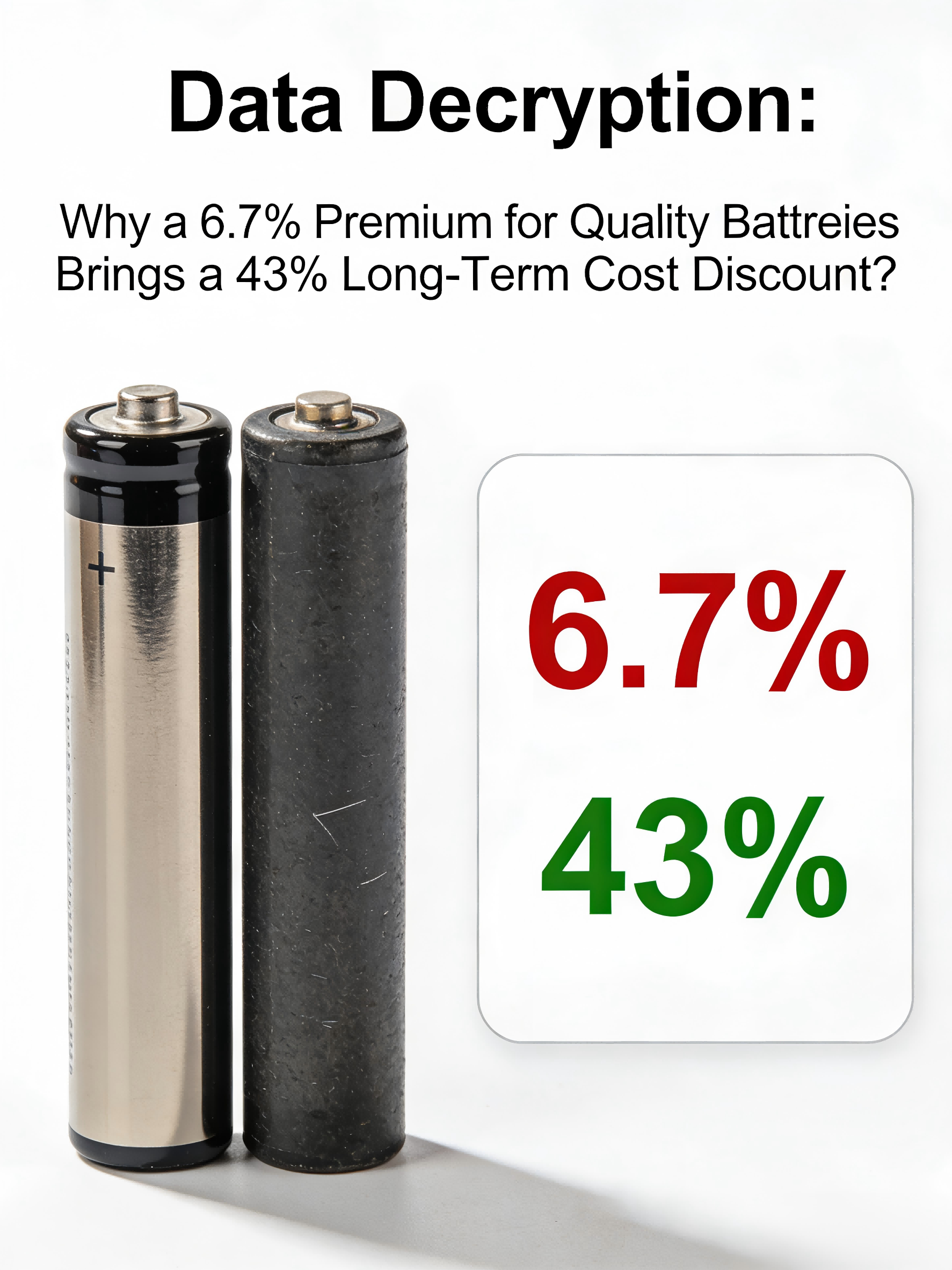
The conclusion is clear: Any potentially higher initial investment for LFP (if it exists) is offset by its superior service life and minimal maintenance costs, resulting in better financial returns over the entire lifecycle. Its Levelized Cost of Storage (LCOS) is significantly lower than other technological pathways.
Part 3: How LFP is "Reshaping" the C&I Energy Storage Landscape?
-
Enables New Models: High cycle life makes economically intensive operational models like "multiple daily peak-shaving and valley-filling" feasible, improving project Internal Rate of Return (IRR).
-
Lowers Financing Barriers: Financial institutions are more willing to finance projects based on LFP technology, recognizing the long-term stability and lower risk profile of the asset.
-
Drives Standardization: The dominance of LFP encourages industry standardization around its technical characteristics, from system design to operation management, further reducing costs across the supply chain.
Part 4: The SolTrust Practice: Translating LFP Advantages into Client Value
At SolTrust, we go beyond simply integrating LFP cells into systems. We maximize their lifecycle value through cutting-edge technology:
-
Intelligent BMS Algorithms: Our Battery Management System employs precise temperature field management and balancing control to proactively protect each cell, ensuring real-world performance closely mirrors theoretical lifespan.
-
System-Level Optimization: We combine the long-life characteristics of LFP with highly efficient PCS (Power Conversion Systems) and optimized thermal management design. This results in C&I-ready, durable products that deliver guaranteed performance for over 10 years.

Conclusion
For C&I energy storage decision-makers, choosing LFP is no longer merely a "conservative decision" about safety. It is a "strategic decision" about maximizing return on investment, optimizing asset management, and ensuring long-term operational stability. It is transforming energy storage from a complex technical option into a clear, reliable, and predictable financial asset.
When you next evaluate an energy storage solution, look beyond the initial price tag. Instead, request a detailed benefit analysis based on Total Cost of Ownership. You will discover that LFP delivers nothing short of a true value revolution.
Batteries Age Faster When Sitting Idle? The Hidden Killer Called "Gradually Aging"
Power Your Adventures: The Definitive SolTrust Portable Power Station Buyer's Guide
Related Article